
Pelvic Organ Prolapse
Pelvic organ prolapse (POP) is a condition wherein pelvic floor muscles and tissues weaken, resulting in one or more pelvic organs like the bladder, uterus, or rectum to drop or bulge into or out of the vagina.
This could be caused by childbirth, however factors like age, chronic coughing, constipation, and obesity can also contribute to the condition.
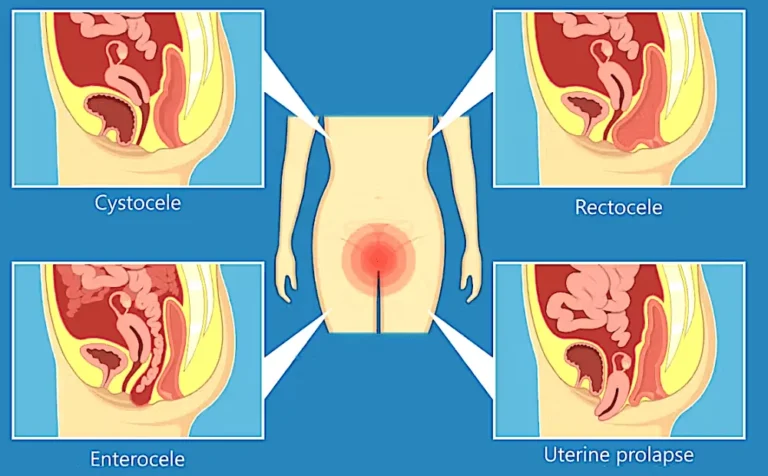
Pelvic organ prolapse is categorized into four stages, from 0 (no prolapse) to 4 (complete eversion), using the Pelvic Organ Prolapse Quantification (POP-Q) system.
Stage 1 involves a slight descent where the most prolapsed part is more than 1 cm above the hymen, while
Stage 2 places it between 1 cm above and 1 cm below the hymen.
Stage 3 is a more significant descent, extending more than 1 cm below the hymen but not fully out, and
Stage 4 represents a complete eversion where organs protrude completely from the vagina.
Pelvic prolapse treatment options range from conservative measures like pelvic floor exercises (Kegels) and using a vaginal pessary to surgical interventions such as reconstruction or, in severe cases, hysterectomy. The best approach depends on the prolapse’s severity, symptoms, and individual factors, with surgery sometimes involving minimally invasive or laparoscopic techniques.
Nonsurgical treatments
➔Pelvic floor exercises: Kegel exercises can strengthen the pelvic floor muscles to provide better support for pelvic organs.
➔Vaginal pessary: A device inserted into the vagina to support the pelvic organs. This is an option for those who don’t want surgery or are not candidates.
➔Lifestyle changes: Avoiding heavy lifting, managing chronic coughs or constipation, and maintaining a healthy weight can help reduce strain on the pelvic floor.
➔Hormone therapy: For some, hormone replacement therapy can relieve symptoms like vaginal dryness or discomfort, though it doesn’t directly treat the prolapse itself.
Surgical treatments
➔Reconstructive surgery: This involves repairing and reinforcing the pelvic floor, ligaments, and vaginal walls. It can be done with or without graft materials.
➔Minimally invasive surgery: Techniques like laparoscopic or robotic-assisted surgery offer a shorter recovery time compared to traditional open surgery.
➔Obliterative surgery: This is an option for select individuals who are not sexually active.
➔Hysterectomy: Removal of the uterus may be considered in severe cases, particularly if a woman has completed childbearing and has other conditions like abnormal bleeding or a family history of uterine cancer.
Meet Our Doctor