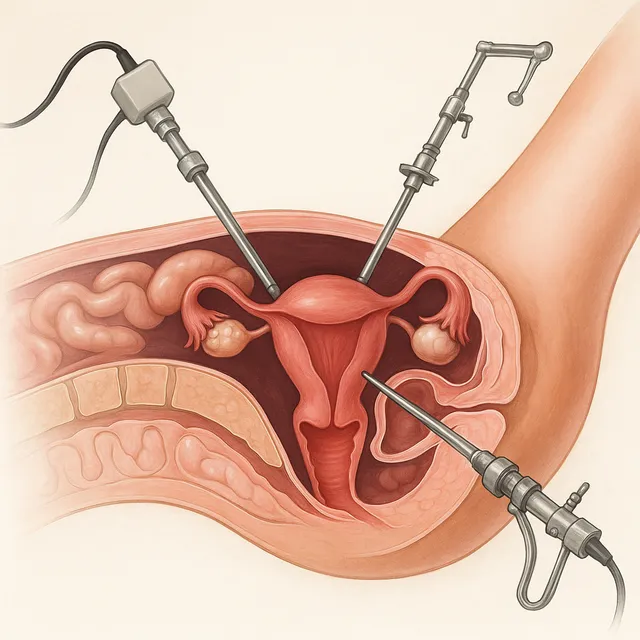


A hysterectomy is the surgical removal of the uterus, which may also involve the cervix, ovaries, and fallopian tubes, depending on the type of procedure.
➔Treating medical conditions that cause abnormal or heavy vaginal bleeding.
➔Removing uterine fibroids or other noncancerous tumors.
➔Treating severe endometriosis or adenomyosis.
➔Correcting uterine prolapse.
➔Treating uterine, cervical, or ovarian cancer.
➔Preventing cancer in high-risk individuals.
➔Abdominal: The uterus is removed through an incision in the abdominal wall.
➔Vaginal: The uterus is removed through the vagina.
➔Laparoscopic: A small incision is made in the abdomen, and a camera and surgical tools are inserted to remove the uterus.
➔Robotic-assisted: Similar to laparoscopic surgery, but the surgeon uses a robotic system to perform the procedure