
Ovarian Cysts
Ovarian cysts are fluid-filled sacs on or in the ovary that are common, generally harmless, and may disappear on their own. Treatment depends on the cyst type and size. larger or more complex cysts may require surgery.
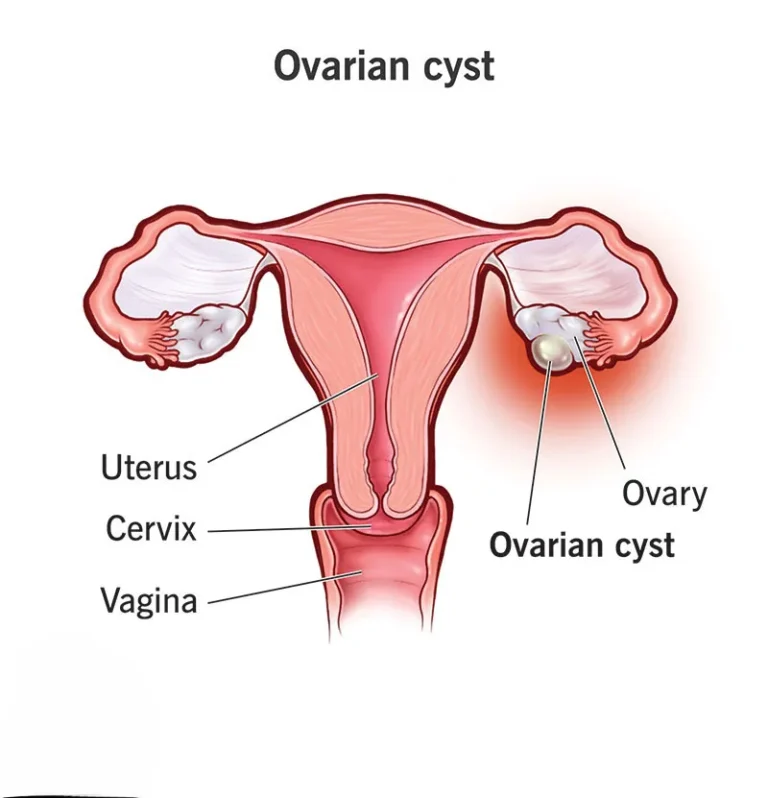
Causes of ovarian cysts
➔Functional cysts are commonly formed during the menstrual cycle when a follicle either doesn’t release an egg or doesn’t shrink after ovulation.
➔Other types may arise from other causes, such as dermoid cysts or cystadenomas, which do not go away on their own and can sometimes be associated with other conditions.
Symptoms
Many ovarian cysts have no symptoms and are discovered during a pelvic exam or imaging for another reason.
If symptoms occur, they may include:
- Bloating or a feeling of fullness
- Dull ache or pressure in the lower abdomen or back
- Pain during intercourse or during a menstrual period
- Pressure on the bladder or bowel, leading to a frequent need to urinate or have a bowel movement
- Nausea and vomiting
Severe pain can indicate a more serious complication like a ruptured cyst or ovarian torsion (twisting of the ovary), which requires emergency medical care.
Surgical removal may be necessary for larger cysts, cysts that cause significant pain, or cysts that are potentially cancerous. Surgical options include:
➔Laparoscopy: A minimally invasive procedure using small incisions.
➔Laparotomy: An open surgery with a larger incision, often used for more complex cases or if cancer is suspected.
Meet Our Doctor